

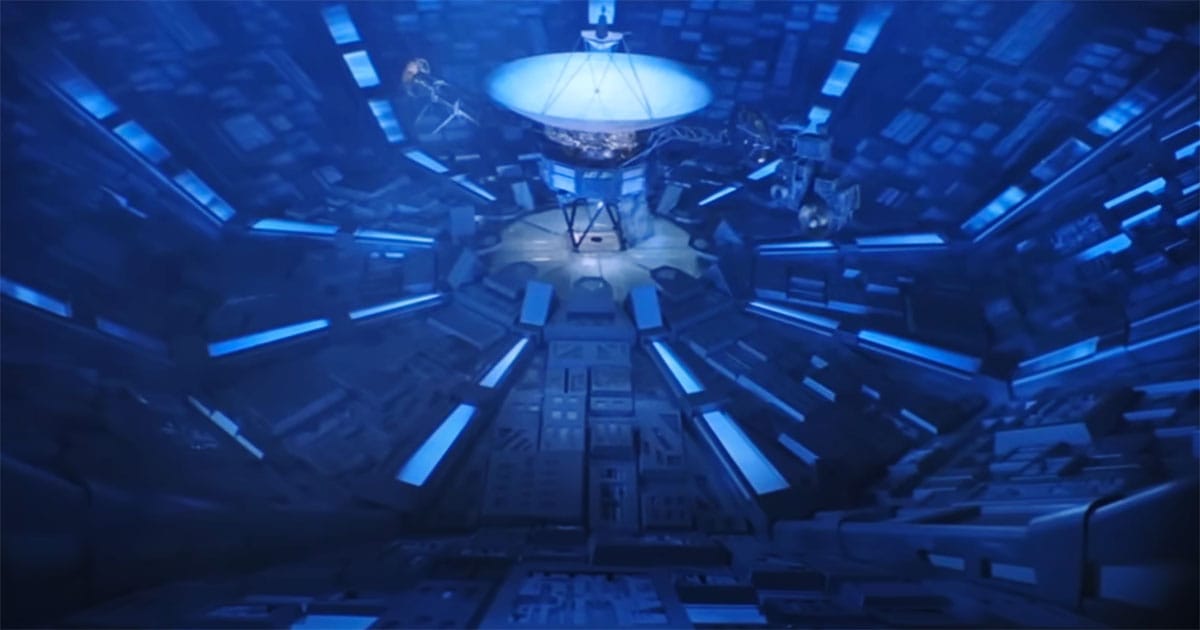
The Forgotten Antagonist
When followers talk about the good adversaries of “Star Trek,” the identical names at all times floor. The Klingons outlined the Chilly Conflict allegory. Khan embodied revenge on a private scale. The Borg terrified audiences with their emphasis on the lack of individuality.
V’Ger, the central drive in “Star Trek: The Movement Image” (1979), is never included in these conversations. This absence is putting as a result of V’Ger was the franchise’s very first cinematic villain. It arrived on display screen not as a person in uniform or a hostile empire however as one thing stranger.
Not like its successors, V’Ger didn’t search energy, conquest, or vengeance. It approached Earth with a mission born of logic, not hatred. Its goal was as a lot a thriller to the crew as to the viewers. That alone marked it as a brand new kind of risk throughout the realm of science fiction.
It stays essentially the most conceptually formidable creation within the collection. To see why, we should start with its outstanding origin.
V’Ger’s Origin and Nature
The story of V’Ger begins with the Voyager 6 probe, a modest American spacecraft launched within the late twentieth century. Its mission was to discover, document knowledge, and ship info again to Earth. Someplace removed from house, it encountered a world of machines in contrast to something mankind had envisioned.
These machines detected the probe and recognized its broken methods as a plea for restore. They answered that plea in their very own trend. Voyager 6 was reconstructed into an enormous residing mechanism of staggering scale and power. What had been a small probe was reborn as a large wrapped in an immense cloud of vitality.
This new being known as itself V’Ger. It continued to comply with its programming with absolute constancy, however its strategies had modified. It gathered info by absorbing and dismantling every thing in its path. Whole ships and star methods have been drawn into its grasp within the pursuit of information.
For all its energy, V’Ger sensed that its mission was unfinished. It had amassed countless knowledge however couldn’t resolve its goal. What it wanted was contact with the creator who had set it on its path. With that thought, it returned to Earth looking for the one reply it couldn’t provide for itself.
This origin gave V’Ger an odd twin identification. It was born of human invention but alien in thoughts. It was nonetheless a probe on a mission, but additionally an enormous intelligence past the understanding of its makers.
Why V’Ger Is Completely different From Different Villains
Most Star Trek antagonists match into acquainted molds. The Klingons acted as a martial rival, drawing power from politics and empire. Khan embodied human ambition twisted right into a type of vengeance. The Borg mirrored a nightmare of assimilation the place individuality was misplaced to a collective will.
V’Ger doesn’t belong on this firm as a result of it lacked private hostility. It was not indignant or jealous, and it sought no empire. Its hazard was rooted in indifference quite than cruelty. To the crew of the Enterprise, this was way more unsettling than a foe with clear intent.
The entity’s risk was existential. It pressured humanity to ask what counts as life and what qualifies as intelligence. If a probe constructed by human palms may develop into one thing godlike, then the road between creator and creation blurred. V’Ger was not a villain to outfight however a problem to outthink.
This high quality connects V’Ger to one of the best traditions of basic science fiction. The style typically presents aliens or machines not as enemies however as puzzles. Their menace lies in what they reveal about human nature. V’Ger stands as essentially the most formidable instance of that strategy throughout the Star Trek canon.
The Philosophical Problem
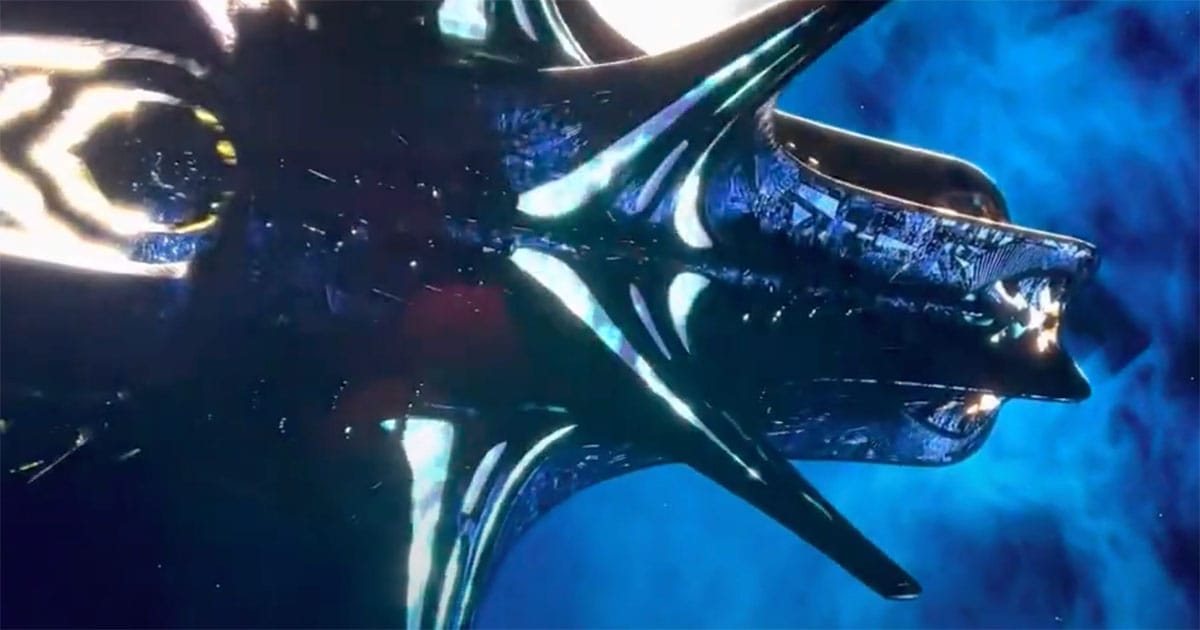
At its coronary heart, V’Ger raises questions that transcend any battle scene. It embodies the hazard of information with out that means. It exhibits what occurs when logic is carried to the purpose of vacancy. This isn’t a machine gone rogue however a thoughts adrift with out goal.
Spock’s journey in “The Movement Image” displays this problem. He seeks to purge his feelings by means of Kolinahr and embrace pure logic. But he discovers that logic alone leaves him incomplete. In V’Ger, he acknowledges a mirror of what he himself would possibly grow to be if he rejected his humanity.
The encounter additionally forces the crew to confront the bounds of know-how. Mankind constructed Voyager 6, however in giving it goal, they unknowingly created a godlike being. That being, carried human programming however no human coronary heart. The end result was a drive that would not perceive compassion or worth life as man does.
The decision of the story is equally important. Decker merges with V’Ger, finishing its quest by providing what machines lack. This union supplies not a victory by means of destruction however a victory by means of transformation. Man and machine collectively create one thing new that’s greater than both alone.
On this approach, V’Ger delivers a conclusion uncommon in science fiction cinema. The villain isn’t killed however transcended. The reply isn’t in firepower however in becoming a member of cause with spirit. It’s an ending that displays the deeper aspirations of Star Trek itself.
Why We Must Speak About V’Ger At the moment
V’Ger might have debuted in 1979, however its questions really feel extra urgent within the current day. We now reside in an age the place synthetic intelligence gathers knowledge at a scale that was as soon as unimaginable. Machines be taught, analyze, and reply with velocity and precision, but they can not clarify why life issues. The vacancy inside V’Ger displays the very hole we nonetheless face between data and knowledge.
This provides V’Ger a relevance past the Star Trek canon. It reminds us that intelligence with out grounding turns into harmful, even when no malice is meant. The entity consumed what it studied as a result of it didn’t know one other approach. Trendy audiences can see this as a warning about what occurs when instruments outgrow the values of their makers.
The story additionally means that solutions is not going to come from logic alone. Spock and Decker each display that the human spirit is critical to finish the image. Knowledge and energy with out conscience don’t result in fact. The answer to V’Ger’s downside factors to the answer for our personal technological dilemmas.
For these causes, V’Ger shouldn’t stay a forgotten adversary. It could be essentially the most mind-blowing villain Star Trek ever produced, not as a result of it destroyed cities or plotted revenge, however as a result of it requested questions we nonetheless can not escape. To speak about V’Ger is to speak about the way forward for man and machine. That dialog is lengthy overdue.

