

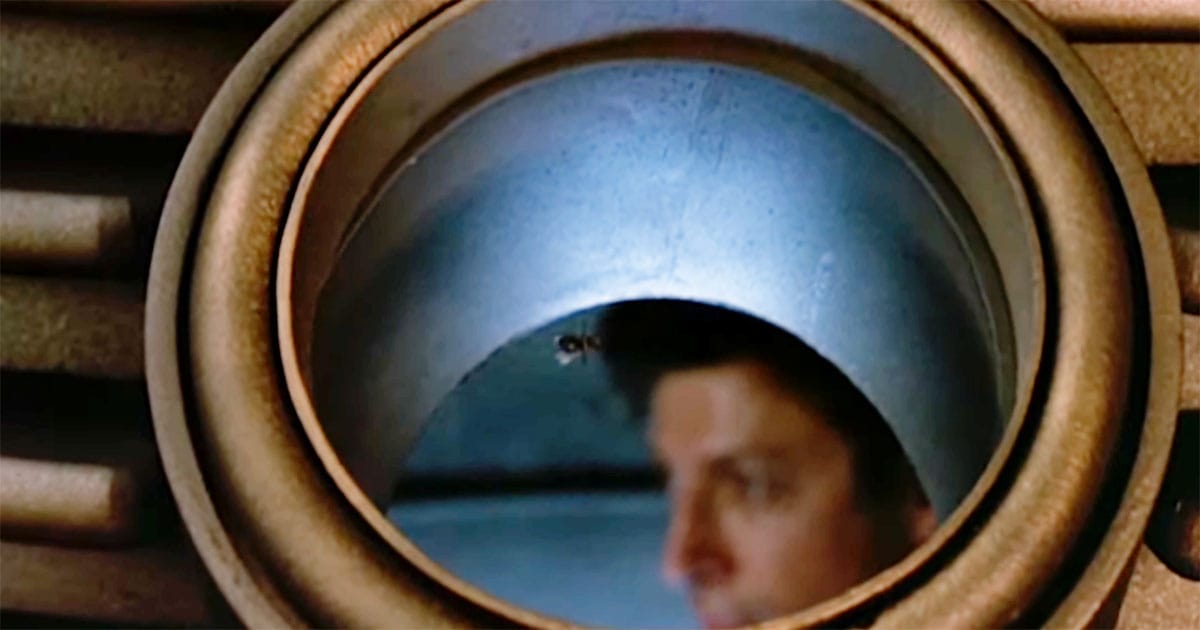
Science fiction has at all times examined the attain of human curiosity. It weighs discovery towards duty with a cool eye. The sphere is a ledger the place creativeness should stability with value. Each new machine guarantees liberation and whispers a warning.
“The Fly” begins as a celebration of mind and precision. A scientist refines teleportation and admires his personal class. The machine shines and the equations sing. The end result isn’t transcendence however contamination.
David Cronenberg treats the premise with scientific endurance. He observes process and aftermath with equal care. His digital camera favors course of over spectacle. The laboratory feels abnormal till it data essentially the most extraordinary failure a thoughts can engineer.
This story isn’t about monsters from elsewhere. It’s a few man whose expertise outruns his judgment. Transformation exposes the ethical deficit that lies hidden inside his confidence. The physique turns into the proof, and the thoughts turns into the witness.
“The Fly” endures as a result of it speaks calmly about break. It reveals how progress with out humility turns inward and consumes its maker. The movie asks what stays of id when methodology replaces knowledge — the reply is measured in loss fairly than glory. Its warning feels earned, exact, and painfully exhausting to disregard at present.
| Attribute | Worth |
|---|---|
| Title | The Fly |
| Director | David Cronenberg |
| Author | David Cronenberg, Charles Edward Pogue |
| Actors or actresses | Jeff Goldblum, Geena Davis, John Getz |
| Rated | R |
| Runtime | 1 h 36 min |
| Field Workplace | ~$60 million worldwide |
| U.S. Launch Date | August 15, 1986 |
| High quality Rating | 8.0 / 10 |
Synopsis
Seth Brundle is a younger scientist whose brilliance hides behind an ungainly method. He believes he has solved one of many nice challenges of recent physics.
His invention — a pair of teleportation pods — guarantees to maneuver matter immediately from one level to a different. The idea feels pure and stylish, a easy extension of logic into actuality.
Brundle meets Veronica Quaife, a journalist who acknowledges the size of his achievement. She begins to file his progress, first as a scientific research and later as a private connection. Collectively, they witness the primary profitable switch of a residing creature, a small victory that appears to substantiate genius. On this second of satisfaction, Brundle decides to make himself the ultimate take a look at.
He enters the machine unaware {that a} single fly has joined him. The machine performs completely. The error is invisible till it begins to rewrite his physique. At first, he feels stronger and sharper, as if evolution has rewarded him for daring.
The change quickly reveals its cruelty. His energy turns into frenzy, his mind turns erratic, and his flesh begins to fail. The scientist who wished to beat distance finds himself trapped inside his personal mutation. The experiment succeeds, and the person disappears.
Themes
The Ambition of Information
Seth Brundle’s story is a contemporary echo of the oldest warning in science fiction. Information pursued with out restraint turns into its personal undoing. Brundle begins his work with the most effective of intentions.
He needs to vary the world, to make distance irrelevant and movement instantaneous. But his devotion to progress blinds him to hazard. What ought to have been a measured investigation turns into an act of religion in himself. The teleporter, constructed to serve man, turns into the instrument of his downfall as a result of he by no means asks if the objective needs to be reached in any respect.
This theme has formed the style from Frankenstein to 2001. Science fiction typically reminds its viewers that mind with out humility results in isolation. Brundle’s destiny isn’t punishment from above however a consequence born of vanity. His discovery works completely. It’s the man who fails.
The Physique and the Thoughts
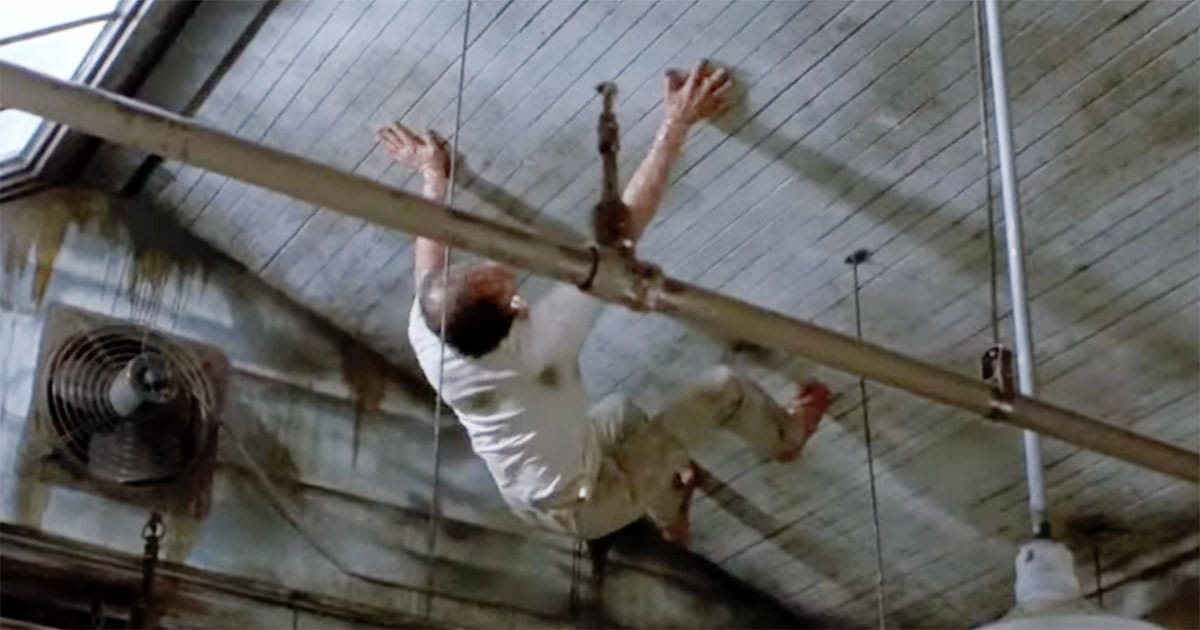
Cronenberg’s fascination with the physique turns the movie right into a research of id. Each stage of transformation appears like an argument between flesh and purpose.
Brundle’s mutation isn’t solely a bodily occasion however a psychological one. The extra his physique modifications, the much less his mind governs it. The scientist who as soon as measured atoms begins to talk of future. His new energy deceives him into believing he has developed past abnormal males when, in reality, he has lowered himself to intuition.
This battle between the rational and the animal defines the film’s horror. It’s not dying that frightens however disintegration, the gradual erasure of the self by the forces it as soon as commanded.
Love because the Measure of Humanity
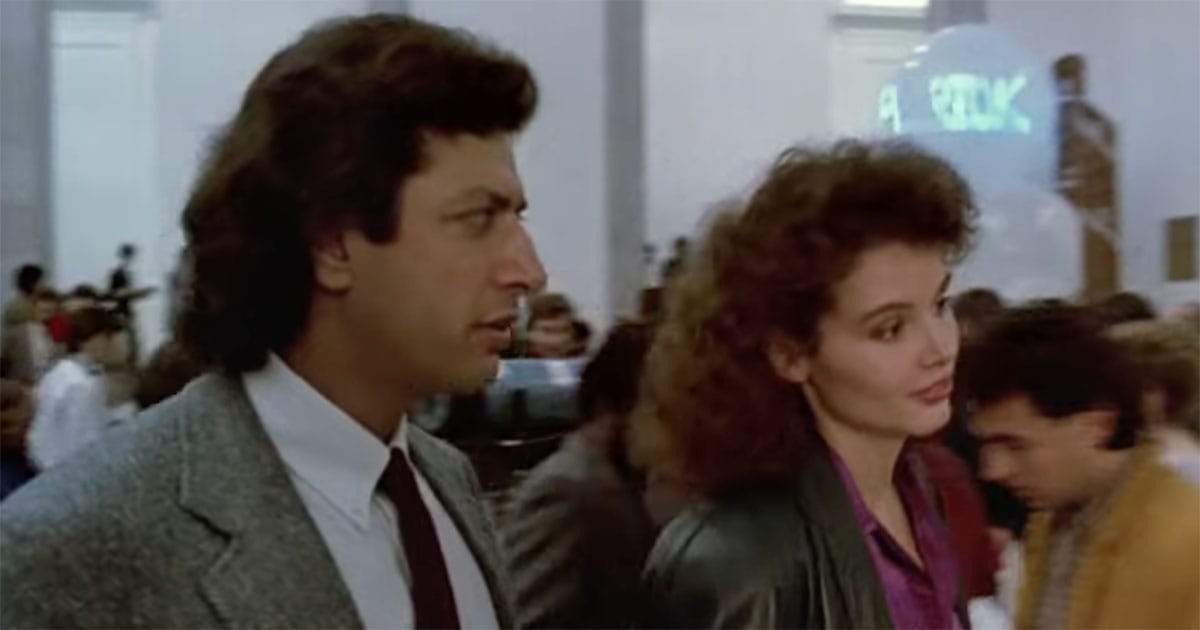
Veronica Quaife stays the emotional heart of the story. Her function is neither savior nor sufferer however the conscience of the narrative. By means of her eyes, the viewer measures what Brundle loses as his experiment advances.
Her compassion is affected person and grounded, the final remnant of human heat in a world of chilly equipment. When she faces the ultimate model of Brundle, the viewers feels the collapse of mind by means of her sorrow. The machine has perfected transport however destroyed connection.
Expertise and the Phantasm of Progress
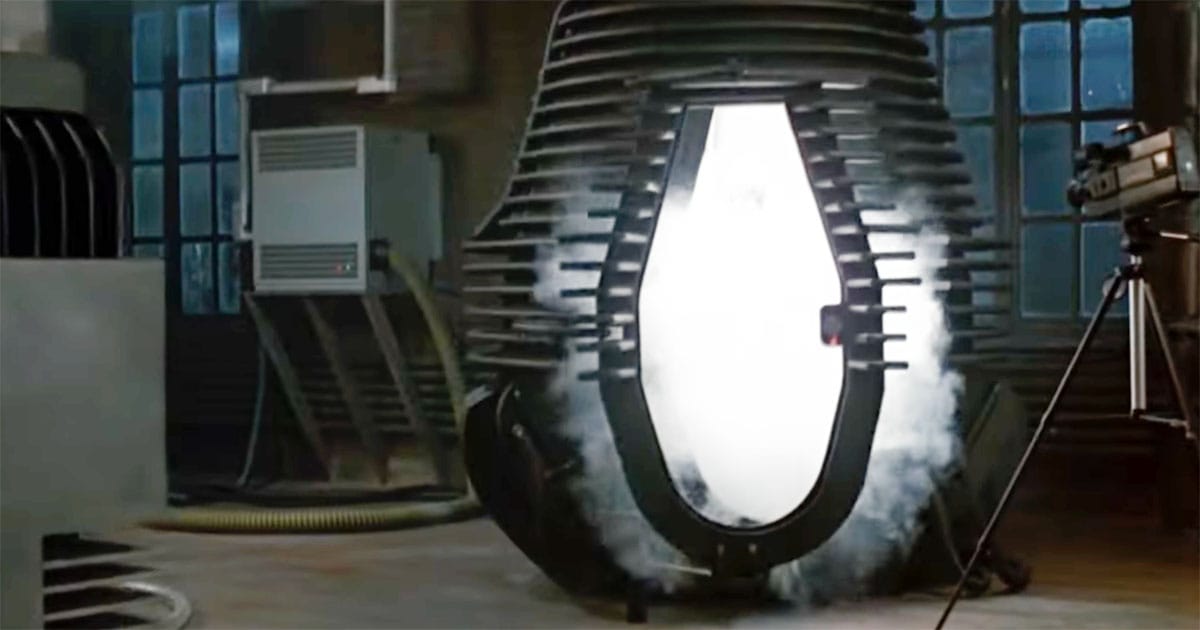
The teleporter stands as an emblem of recent perception in expertise’s purity. It performs precisely as designed and exposes the flaw that design can’t predict, the human being who misuses it.
Cronenberg reveals that machines should not ethical or immoral. They’re extensions of intention. In Brundle’s arms, invention turns into confession. The machine reveals extra about its maker than about physics. Progress succeeds, and man fails.
Who Will Watch
“The Fly” speaks to viewers who worth science fiction as inquiry fairly than escape. It appeals to those that discover fascination not in explosions however in penalties.
The movie invitations a considerate viewers, one which prefers questions over reassurance. It doesn’t flatter the viewer with simple morality or spectacle. As an alternative, it presents a world the place concepts have weight and each discovery carries an ethical worth.Those that admire the mental lineage of writers like Arthur C. Clarke and Isaac Asimov will acknowledge the construction of thought beneath the horror.
Cronenberg’s movie is pushed by speculation and end result, by methodology turned towards its maker. It’s an experiment that performs out earlier than the eyes of the viewers, one which confirms the human tendency to succeed in too far. The fear isn’t supernatural. It’s rational, predictable, and due to this fact plausible.
The film rewards endurance and a spotlight. Its pacing is deliberate and its imagery uncomfortable, but each scene advances the argument that progress with out humility turns into corruption. The viewer who seeks that stability between purpose and worry will discover the movie each compelling and sobering. It’s not for individuals who crave easy decision. It’s for individuals who want to perceive why tragedy so typically follows invention.
The movie additionally endures for its honesty concerning the human situation. It doesn’t condemn science however asks for conscience to accompany it. In that approach, it feels much less like a warning from the previous and extra like a forecast that retains coming true. Viewers who worth considerate craftsmanship will recognize its self-discipline, its restraint, and its refusal to sensationalize.
“The Fly” will entice women and men who grew up questioning what lies past the laboratory door. It belongs to the viewers that respects science as a pressure that may illuminate or destroy, relying on the thoughts that guides it. The movie’s legacy isn’t constructed on worry alone however on reflection. It reminds its viewers that understanding nature is barely half the duty. The larger problem is to know ourselves earlier than the experiment begins.

