

Colonial Individuals lived very in another way than we do at this time. They had been constructing new lives in a wierd and sometimes unforgiving land, far faraway from the conveniences we now take as a right. The individuals who came visiting on the Mayflower in 1620—and the waves of settlers who adopted all through the Seventeenth and early 18th centuries—had a completely totally different outlook on each day life. They confronted distinctive chores, home duties, risks, and discomforts that formed the whole lot from their routines to the objects they saved at house.
Due to that, colonial households had been full of objects that appear uncommon, ingenious, or downright weird by fashionable requirements. On this checklist, we’ll have a look at a number of the oddest issues early Individuals relied on simply to get by the day. These are ten of essentially the most distinctive, shocking, and unforgettable objects present in colonial properties. It’s arduous to imagine Individuals as soon as lived like this—however they did. Three cheers for progress, plumbing, electrical energy, scorching showers, and the enjoyment of scrolling by your cellphone as a substitute of carding wool by candlelight.
Associated: 10 Colonial Punishments We Fortunately Ended
10 Sundial
There weren’t many dependable watches or clocks round in colonial America. Whereas mechanical time-keeping had existed in Europe for hundreds of years, early settlements in North America had far much less entry to such instruments—particularly within the Seventeenth century. As an alternative, many colonists relied on moveable sundials to inform time. Identical to individuals had been doing for hundreds of years earlier than them, these early settlers used sundials to trace the solar’s motion throughout the sky. Because the solar moved from east to west, it forged a shadow onto a small steel plate, giving observers a tough concept of the time.
These moveable sundials had been widespread in colonial households as a result of they had been easy to make and correct sufficient for each day duties. And for properties and not using a sundial, colonists typically used “midday marks” or window markings—etched traces displaying the place daylight hit at sure instances of day. These improvised indicators sound unreliable at this time, however for a lot of settlers residing with out clocks or watches, they had been remarkably sensible.[1]
9 Sampler
Younger women within the fashionable age go on TikTok and Instagram, scroll by a whole lot of movies, and go their free time immersed within the digital world. Smartphones are practically ubiquitous in fashionable American society—and particularly so for teenage women. However in colonial America, younger ladies had no such know-how. They needed to discover way more hands-on methods to go the time.
The most well-liked pastime was needlework. Embroidery wasn’t invented in America, nevertheless it was extremely widespread amongst teenage women and younger ladies all through the colonies. As a result of fabric was costly, they usually didn’t have the posh of practising on giant items of cloth. Enter the sampler.
A sampler was a small embroidered fabric that just about each younger girl in colonial America saved close by. Just a few inches broad and lengthy, it supplied simply sufficient area to follow stitches, designs, and ornamental motifs. Consider it because the colonial equal of a contemporary journal or sketchbook—a non-public area to strive new methods, report household dates, and experiment creatively. Completed samplers had been usually saved or displayed, and even mirrored a lady’s ability and readiness for grownup home duties.[2]
8 Salt Cellar
A “salt cellar” is mainly a elaborate identify for any vessel that holds salt on the dinner desk. In its most simple kind, it was an ornate bowl or dish that sat because the desk’s centerpiece. Colonial Individuals relied on them for precisely what the identify suggests: holding salt for meals, whether or not for each day household dinners or when visitors got here calling.
However two issues about salt cellars reveal lots about colonial life. First, not each household had one. Having sufficient refined salt to go away out on the desk signaled {that a} family was no less than considerably affluent. Second, the seating place relative to the salt cellar mentioned the whole lot about social hierarchy.
The top of the family sat on the prime of the desk. Visitors of honor had been seated “above the salt,” nearer to the host. Kids, less-respected visitors, and distant family members sat “beneath the salt,” farther away. A easy bowl of salt may reveal your entire social order of a colonial eating room.[3]
7 Hornbook
Studying and writing weren’t practically as widespread within the colonies as they’re now. Most boys realized fundamental literacy both from their dad and mom—in the event that they had been literate themselves—or from ministers and casual schoolmasters. Women usually acquired far much less formal education, although many nonetheless realized at house.
In most colonial properties, households saved what was known as a “hornbook” for youngsters. Girls and boys alike used it to memorize the alphabet, numbers, spiritual verses, and different fundamental classes. The hornbook consisted of a sheet of paper mounted on a wood pill (or typically leather-based or bone) and coated by a skinny layer of clear animal horn—an early type of lamination.
The hornbook was usually the primary academic software a toddler encountered in colonial life. For a lot of women, it was additionally the one structured studying they acquired earlier than maturity.[4]
6 Mattress Hotter
Have you ever ever rushed house on a chilly winter evening, jumped into mattress, and burrowed into layers of blankets? Right now, we take pleasure in heated properties, comforters, and heat electrical bedding. None of that was accessible in colonial America, the place households spent lengthy, freezing winters in drafty wood properties.
To outlive the coldest nights, households turned to the warming pan. A warming pan was a big round steel pan full of scorching coals and hooked up to a protracted wood deal with. Colonists would shortly slide the pan below the sheets, swish it forwards and backwards, and heat the bedding earlier than climbing in. It was a lifesaver—typically actually.
Nevertheless, it was additionally a fireplace hazard. Warming pans needed to be saved shifting to keep away from scorching linen or beginning a fireplace, and folks normally coated the coals with ash to cut back sparks. Wealthier households typically used heated stones wrapped in fabric as a safer different. However for many colonial properties, the warming pan was indispensable.[5]
5 Wool Playing cards
Residing in colonial America meant you couldn’t merely drive to the shop—or order from Amazon—while you wanted garments. Settlers arrived with no matter clothes they introduced throughout the Atlantic, and when these wore out, they needed to make new ones from scratch.
Sheep’s wool was the first materials accessible, and processing it was a painstaking, multistep job. One important software in each house was the wool card. Wool playing cards had been two skinny boards coated with tiny steel tooth. Clothes makers—usually moms and daughters—pulled wool fibers throughout the playing cards to untangle them and align the strands.
Solely after carding may the wool be spun into thread on a spinning wheel. It was time-consuming and repetitive, however with out wool playing cards, colonial households would have struggled to make even the only clothes.[6]
4 Candles
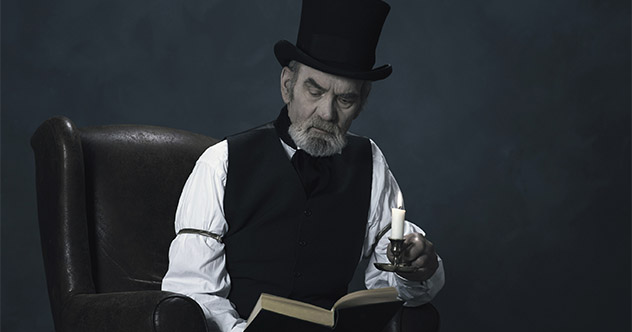
Candles sound like a standard family merchandise—they usually had been. With out electrical energy, candles had been important for lighting properties after darkish. However colonial candles had been very totally different from those we purchase at this time.
Most had been constructed from bayberry wax, tallow, or whale oil. Ladies boiled bayberries and skimmed off the wax that rose to the highest, although it took an infinite amount of berries to make just some candles. Tallow candles had been constructed from animal fats saved after slaughtering livestock, however they smelled disagreeable when burned.
The brightest and cleanest-burning candles got here from spermaceti—the waxy materials discovered within the heads of sperm whales. As whaling expanded, spermaceti candles grew to become a prized, costly commodity within the colonies. They produced a powerful, regular flame that far outperformed different choices and had been utilized by wealthier households or reserved for necessary events.[7]
3 Pomander
Sadly for colonial settlers, scented candles weren’t a factor but. Properties usually smelled like smoke, sweat, and livestock. To make their residing areas extra nice, many households turned to the pomander—a aromatic object that originated in medieval Europe.
A pomander (from the French pomme d’ambre, or “apple of amber”) was normally a bit of fruit, ideally an orange when accessible. Colonists studded the fruit with cloves, rubbed it with oils, and coated it with spices. Because it dried, it launched a nice scent that masked family odors.
Pomanders had been fashionable throughout the holidays and different celebrations, and wives and daughters usually tied them to ribbons and hung them round the home. They had been ornamental, aromatic, and surprisingly efficient at freshening colonial rooms—particularly when citrus was scarce.[8]
2 Whirligig
Children in colonial America didn’t have toys something like those we contemplate regular at this time. No plastic, no electronics, no battery-powered devices. However they did have no less than one easy, fashionable toy: the whirligig.
This early toy consisted of a small round disc—normally bone, clay, or typically a button—with a doubled string threaded by its middle gap. When youngsters pulled the string tight and launched it, the disc spun quickly, making a buzzing or whirring sound. In a approach, it was a centuries-old fidget spinner.
Whirligigs seem in English literature as early as 1686, and excavations at early American settlements have uncovered them courting again practically to the times of the Mayflower. They’ve additionally been present in historical Native American websites. Clearly, the whirligig saved many colonial youngsters entertained for hours.[9]
1 Hearth Buckets
In Seventeenth- and 18th-century New England, there have been no public hearth departments. If a fireplace broke out, everybody in the neighborhood helped put it out. Properties had been made from wooden, roofs had been thatched, and open hearths had been used for cooking. One spark may destroy a complete city.
Due to this, each family was required—typically by legislation—to maintain a fireplace bucket close to the entrance door. These buckets had been made from heavy leather-based and huge sufficient to hold important quantities of water. When a fireplace began, neighbors rushed to the scene, forming a “bucket brigade” during which water was handed hand handy from a nicely or river to the burning constructing.
Hearth buckets had been usually painted with the home-owner’s identify in order that they could possibly be returned later. It was easy, communal, and sometimes the one line of protection settlers had towards catastrophe.[10]

