

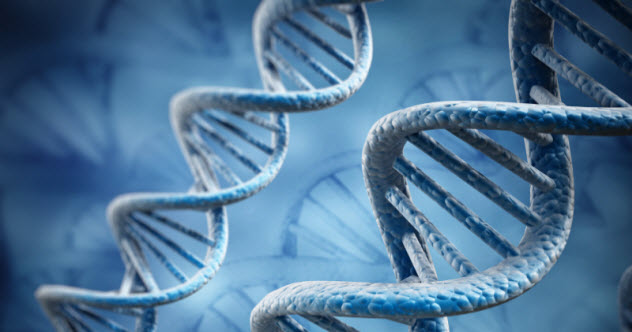
We include a blueprint: the human genome. In 2001, researchers began sequencing it. Twenty-one years later, they completed. And but, mysteries stay. Ninety-eight p.c of our DNA is an enigmatic area often known as the darkish genome. Regardless of our complexity, we have now far fewer genes than some easy organisms. Our Y chromosome is shrinking and probably headed for extinction.
Our DNA accommodates traces of ghost lineages, and there may be proof the environment can alter gene expression. The extra we be taught concerning the human genome, the extra mysteries emerge.
Associated: 10 Extraordinarily Uncommon Helpful Human Genetic Anomalies
10 Darkish Genome
Solely 2% of human DNA accommodates genes that make proteins. The rest is called the “darkish genome.” A lot of this area consists of repetitive strings, together with transposons—DNA components that may transfer round. These jumps may cause dramatic evolutionary modifications, such because the lack of tails in early people. Different parts come from historical endogenous retroviruses that embedded themselves in our genome tens of millions of years in the past.
Initially, geneticists labeled this 98% “junk DNA,” assuming it had no operate. They have been incorrect.
The darkish genome controls gene expression, figuring out when and the way proteins are produced. It responds to environmental elements akin to toxins, stress, train, and sleep. In accordance with Samir Ouzain of Haya Therapeutics, “proteins are the {hardware}, and the darkish genome is the software program.”
A lot of this regulation comes from non-coding RNA—molecules that act just like the conductor of the genetic orchestra. If misregulated, the darkish genome can overwhelm the immune system, gas most cancers development, and contribute to illnesses like Alzheimer’s, schizophrenia, Crohn’s illness, and psoriasis.[1]
9 G-Worth Paradox
Wheat has 124,207 genes; people have solely about 24,200. But people are much more complicated. This contradiction is called the G-value paradox. Sophistication in an organism is just not tied to the variety of genes however to the variety of protein households produced by these genes.
A key issue behind the paradox is that solely a small fraction of our genome really produces proteins. David Alvarez-Ponce of the College of Nevada, Reno, compares it to a toolbox. Organisms like wheat have many redundant “instruments”—a number of variations of comparable genes—whereas people possess fewer instruments with broader, extra specialised makes use of.
Pure choice may additionally clarify the paradox. In BBA Advances, Subhash Lakhotia writes that pure choice acts like a tinkerer, not an engineer. If a system works—even whether it is inefficient—it tends to persist. Thus, organisms might evolve sprawling, inelegant genomic toolkits just because they operate effectively sufficient to move on to the following technology.[2]
8 Y Chromosome Weirdness
The Y chromosome is among the strangest stretches of human DNA. For many years, scientists dismissed it as a genetic desert, a chromosome that merely “made males” and little else. But the Y hides many shocking behaviors. Not like different chromosomes, it doesn’t recombine with a accomplice throughout fertilization. As a substitute, it recombines with itself utilizing palindromic sequences—virtually like genetic self-repair.
This “incestuous” trade can repair mutations, however it might additionally by accident delete vital genes, contributing to infertility.
Over roughly 150 million years, the Y chromosome has misplaced about 95% of its ancestral genes. Geneticist Jennifer Graves has proposed that the human Y chromosome might ultimately disappear fully. A number of mammals—the creeping vole and sure Japanese spiny rats—have already developed various sex-determination methods after dropping their Y.
However critics argue that gene loss on the Y has stabilized and should have reached equilibrium. Whether or not the chromosome is doomed or just quirky stays considered one of genetics’ nice unanswered questions.[3]
7 Human Accelerated Areas
For tens of millions of years, a lot of mammalian DNA remained steady. However round six million years in the past—when people diverged from chimpanzees—sure areas modified quickly. These are often known as Human Accelerated Areas, or HARs. They modify the operate of current genes quite than including new ones. Many HARs are linked to mind development and group.
Geneticists determine HARs by evaluating the human genome to that of our closest family. Notable examples embrace FOXP2, related to speech and advantageous motor management; AUTS2, correlated with autism; and NPAS3, related to schizophrenia. These areas typically affect mind cell improvement or neural wiring.
Researchers at UC San Diego found one particularly intriguing web site: HAR123. It isn’t a gene however a regulatory “quantity management” that adjusts the activation of close by genes. HAR123 seems to advertise cognitive flexibility—our uniquely human potential to unlearn outdated data and adapt to new circumstances.[4]
6 Ghost Lineages
Human DNA accommodates remnants of extinct human species like Neanderthals and Denisovans—but additionally hints of mysterious “ghost lineages” with no recognized fossils. In 2020, Science Advances reported that West African genomes contained DNA from an unknown archaic inhabitants. This interbreeding seemingly occurred round 50,000 years in the past, much like the timeline of Neanderthal interbreeding elsewhere on the earth.
If these ghost genes stay right now, they seemingly offered a survival benefit. But we nonetheless don’t know whether or not they got here from a single historical species or a number of misplaced teams.
In Might 2025, researchers in China’s Yunnan province made one other discovery. Whereas analyzing the DNA of a 7,100-year-old skeleton, they discovered markers from a beforehand unknown human department. This group, dubbed the Basal Asian Xingyi lineage, diverged from different people round 40,000 years in the past.
These ghostlike ancestors recommend that human evolution was much more tangled than as soon as believed.[5]
5 De Novo Genes
Some genes don’t descend from earlier genes in any respect—they emerge from “junk DNA.” These are often known as de novo genes. Many are energetic within the testes and the cerebral cortex, suggesting roles in replica and superior cognition. Geneticists imagine such genes assist organisms quickly adapt to new pressures.
De novo genes typically seem throughout stress, an infection, or immune activation. Since sexual choice drives fast evolution in male reproductive organs, it isn’t shocking that many human de novo genes originate there.
However novel genes are a double-edged sword. Whereas they might assist outline human-specific traits, they’ll additionally introduce vulnerabilities. A number of de novo genes contribute to tumor development, schizophrenia, autism, and different neurological problems.
As a result of these genes haven’t any ancestral variations—not even in chimpanzees—they continue to be among the most perplexing additions to our genome.[6]
4 Distinctive Duplicates
Often, the human genome duplicates whole genes. This creates an authentic copy to carry out its normal position and a spare copy free to evolve new capabilities. These distinctive duplicates produce species-specific traits—however in addition they make us vulnerable to sure illnesses.
In 2007, James Sikela of the College of Colorado examined 20,000 genes and recognized a number of vital duplicates. One instance is AQP7, important for transporting water and sugars into cells. Chimps have two copies of this gene; people have 5. Sikela means that these additional copies might have boosted early people’ endurance on lengthy, sizzling journeys throughout the savannah.
Gene duplication may also be harmful. Having three copies of the SNCA gene will increase the danger of Parkinson’s illness. Duplications in PMP22 trigger Charcot–Marie–Tooth illness, and human-specific genes like SRGAP2 and Notch2NL each expanded our brainpower and raised the danger of neurodevelopmental problems.
Evolution giveth—and evolution taketh away.[7]
3 The Unknome
Geneticists nonetheless don’t know what about 20% of our genes do. To map these mysteries, researchers Matthew Freeman and Sean Munro created the “unknome,” a database rating genes by their “knowness” scores. 1000’s rating close to zero, that means we all know virtually nothing about their operate, construction, or distribution.
To check the system, researchers studied 260 low-knownness genes shared between fruit flies and people. 1 / 4 of those genes proved important—knocking them out precipitated loss of life or extreme developmental points. Others affected fertility, locomotion, stress response, and even wing formation in flies.
The Unknome database is open, customizable, and designed to steer analysis towards uncared for genetic areas. And whereas the variety of mysterious genes has dropped because the early 2000s, Munro notes that “there are nonetheless a pair thousand genes within the human genome, at the least, for which primarily nothing is thought.”[8]
2 Misplaced DNA
People have misplaced 1000’s of genes over the course of evolution. Many turned pseudogenes—damaged variations of once-functional genes. Regardless of being inactive, these misplaced genes typically regulate energetic ones and assist outline species-specific traits.
Practically 10,000 genes widespread to all different mammals are lacking in people. Many are associated to sensory notion, metabolism, and mind operate. Their absence suggests they supplied a survival benefit to early people.
These genomic losses formed trendy people in quirky methods. We can’t produce vitamin C as a consequence of a damaged GULO gene. The lack of olfactory receptor genes dulled our sense of scent. The disappearance of the muscle gene MYH16 contributed to modifications in jaw form—and probably allowed room for a bigger mind.
In accordance with Yale’s Steven Reilly, “deleting genetic code can lead to profound penalties for traits that make us distinctive as a species.”[9]
1 Epigenetic Modifications
Typically gene expression modifications with out altering the underlying DNA. This phenomenon is called epigenetic modification. It outcomes from environmental elements like eating regimen, train, stress, life-style, and publicity to toxins.
Epigenetic mechanisms embrace histone modification, which impacts how tightly DNA is packaged, and DNA methylation, which tends to silence genes. These processes affect when, the place, and the way a lot protein a gene produces. As a result of the DNA sequence itself is unchanged, epigenetic alterations are reversible—at the least in concept.
Some scientists imagine epigenetic modifications could be handed to offspring. A dramatic instance comes from the Dutch Starvation Winter of 1944–45. Youngsters born through the famine confirmed larger charges of coronary heart illness, schizophrenia, and sort 2 diabetes many years later. Their our bodies appeared “reprogrammed” to retailer fats extra effectively as a consequence of prenatal hunger.
If environmental stress can alter gene expression throughout generations, trauma and PTSD might have intergenerational penalties that echo far past a single lifetime.[10]

