

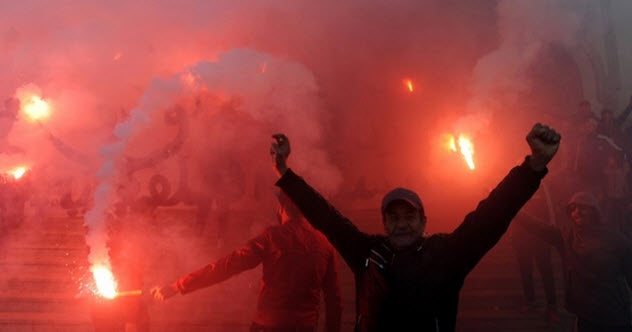
All through historical past, protests have served as highly effective catalysts for change, giving atypical folks the means to problem injustice, oppression, and inequality. From small, native acts of defiance to huge, world demonstrations, these actions have reshaped societies, toppled regimes, and impressed generations. Whereas some protests have erupted spontaneously, others had been rigorously organized, fueled by braveness, conviction, and the idea that collective motion can overcome even probably the most entrenched powers.
The tales of those protests remind us that social and political transformation hardly ever comes with out wrestle. College students, staff, ladies, and marginalized communities have repeatedly risked arrest, violence, and even demise to demand fundamental human rights, equality, and freedom. But repeatedly, their persistence has confirmed that decided, unified voices can problem authority, change legal guidelines, and shift public consciousness.
This record explores ten of probably the most influential protests in fashionable historical past, highlighting the braveness, technique, and influence of every. From nonviolent demonstrations that toppled authoritarian regimes to daring acts of civil disobedience that sparked world actions, these occasions reveal how folks, when united by a shared imaginative and prescient, can alter the course of historical past. As you learn, you’ll uncover the profound methods atypical residents have formed the world by extraordinary acts of protest.
Associated: 10 Weird Protests You Would possibly Have Missed
10 The Velvet Revolution (Czechoslovakia, 1989)
In late 1989, Czechoslovakia skilled a nonviolent wave of protests that dramatically modified the nation’s political panorama. Referred to as the Velvet Revolution, the motion started in November after scholar activists had been arrested throughout a peaceable demonstration in Prague. This preliminary spark ignited widespread outrage towards the Communist regime, which had dominated since 1948.
What made this motion outstanding was the dimensions and restraint with which residents organized. Large demonstrations swept throughout main cities, with college students, staff, artists, and intellectuals becoming a member of the trigger. Protesters demanded free elections, the top of censorship, and the dismantling of single-party rule. Symbolic acts—such because the now-iconic jingling of keys—signaled each unity and a peaceable “unlocking” of freedom.
The Civic Discussion board, fashioned by dissidents together with playwright Václav Havel, emerged because the motion’s central organizing pressure, coordinating negotiations with authorities authorities. Regardless of a long time of repression, the revolution largely prevented violent clashes, and the dedication to peaceable resistance grew to become considered one of its defining options.
Inside weeks, the Communist management resigned. Free elections had been scheduled for 1990, ending 4 a long time of authoritarian rule. Havel later grew to become the primary non-Communist president in over forty years. The Velvet Revolution not solely reshaped Czechoslovakia but in addition impressed related democratic actions all through Jap Europe, proving that mass, peaceable protest may dismantle even probably the most entrenched regimes.[1]
9 The Stonewall Riots (New York Metropolis, 1969)
The Stonewall Riots are extensively thought-about the catalyst for the trendy LGBTQ+ rights motion. On June 28, 1969, police raided the Stonewall Inn, a homosexual bar in New York Metropolis’s Greenwich Village. Police harassment and discriminatory legal guidelines had pushed the LGBTQ+ neighborhood into a long time of concern and secrecy, however this raid ignited a spontaneous wave of resistance.
Patrons fought again, joined by transgender people, drag queens, homeless queer youth, and neighborhood residents. The rebellion lasted a number of days, with protesters clashing with police, forming barricades, and refusing to yield to intimidation. The shock and power of Stonewall reverberated by the town, bringing long-suppressed anger and solidarity to the floor.
Within the aftermath, activists fashioned organizations such because the Homosexual Liberation Entrance and the Homosexual Activists Alliance. One yr later, the primary Christopher Avenue Liberation Day march—now often known as Satisfaction—commemorated the anniversary of the rebellion. These annual marches rapidly unfold worldwide.
Whereas Stonewall didn’t instantly change legal guidelines, it dramatically shifted public consciousness. It remodeled the LGBTQ+ wrestle from an often-hidden battle into a visual, political motion rooted in collective resistance. Its legacy endures as a strong image of defiance, dignity, and the transformative influence of marginalized voices demanding justice.[2]
8 The Soweto Rebellion (South Africa, 1976)
The Soweto Rebellion was a pivotal second in South Africa’s wrestle towards apartheid. On June 16, 1976, 1000’s of Black college students marched to protest the federal government’s decree requiring Afrikaans—considered by many because the “language of the oppressor”—for use alongside English in colleges. For college kids, this was greater than a curriculum challenge; it was a logo of apartheid’s systemic try to manage and restrict their futures.
The march started peacefully however turned violent when police fired dwell ammunition on the college students. Photos of the chaos—particularly the {photograph} of 13-year-old Hector Pieterson’s physique being carried by a fellow scholar—sparked world outrage and introduced worldwide consideration to apartheid’s brutality.
The rebellion ignited waves of resistance throughout the nation. College students, staff, and neighborhood members organized sustained protests, boycotts, and strikes. The federal government responded with extreme repression, however the rebellion irreversibly shifted momentum towards the anti-apartheid motion.
Worldwide condemnation intensified, resulting in financial sanctions, cultural boycotts, and world stress that weakened the apartheid regime over time. Immediately, June 16 is commemorated as Youth Day in South Africa, honoring the bravery of the scholars whose defiance helped pave the way in which for the top of apartheid within the early Nineteen Nineties.[3]
7 The Indian Salt March (India, 1930)
The Salt March, led by Mahatma Gandhi in 1930, stands as considered one of historical past’s most iconic acts of civil disobedience. On the time, the British colonial authorities imposed a monopoly on salt manufacturing, forcing Indians to purchase closely taxed salt—despite the fact that it was available in nature. Gandhi noticed the tax as each unjust and symbolic of British oppression.
On March 12, 1930, Gandhi left Sabarmati Ashram with 78 followers on a 240-mile journey to Dandi. Over the following 24 days, 1000’s joined the march, reworking it right into a nationwide motion. When Gandhi reached the Arabian Sea on April 6 and lifted a handful of salt, he overtly violated British legislation in an act that resonated throughout the nation.
Tens of millions adopted his instance by producing or buying untaxed salt, boycotting British items, refusing to pay taxes, and interesting in different nonviolent acts of resistance. The Salt March attracted world consideration, revealing the ethical pressure of the Indian independence motion and incomes worldwide sympathy.
Though the British authorities arrested 1000’s—together with Gandhi—the motion continued to develop. The Salt March finally strengthened the push towards Indian independence and cemented Gandhi’s philosophy of satyagraha, inspiring future civil rights actions worldwide.[4]
6 The March on Washington for Jobs and Freedom (United States, 1963)
The March on Washington, held on August 28, 1963, was one of many largest political rallies in U.S. historical past and a defining second within the civil rights motion. Over 250,000 folks converged on the nation’s capital to demand civil and financial rights for African People. Organized by the “Massive Six” civil rights leaders, the march aimed to stress the federal authorities to finish segregation and move significant civil rights laws.
What made the march outstanding was the disciplined, peaceable demeanor of the group. Contributors carried indicators, sang freedom songs, and listened to leaders talk about justice and equality. The occasion culminated in Dr. Martin Luther King Jr.’s historic “I Have a Dream” speech, which has turn into probably the most well-known addresses in American historical past.
The march had a direct influence on public opinion, highlighting the ethical authority of the civil rights motion. Media protection broadcast pictures of unity and willpower, difficult racist stereotypes and galvanizing help for reform. Lower than a yr later, the Civil Rights Act of 1964 was signed into legislation, outlawing segregation in public areas and banning employment discrimination.
The March on Washington stays a strong instance of how peaceable protest can affect authorities coverage and encourage generations to battle for justice.[5]
5 The Girls’s March (United States, 2017)
The Girls’s March, held on January 21, 2017, grew to become one of many largest single-day protests in U.S. historical past. Organized in response to issues about threats to ladies’s rights, healthcare entry, immigration protections, and racial equality, the march expanded quickly from a Washington, D.C., demonstration into a worldwide motion with occasions in over 600 U.S. cities and greater than 80 nations.
The march was notable for its range and inclusivity. Organizers introduced collectively seasoned feminist leaders, youthful activists mobilized by social media, and folks of all races, genders, ages, and backgrounds. The peaceable demonstration was marked by inventive indicators, chants, and speeches emphasizing unity and resistance.
Past its huge scale, the march sparked renewed activism. It energized voter registration drives, legislative advocacy, and grassroots organizing, significantly amongst younger ladies and marginalized communities. It additionally pushed points like sexual violence, healthcare rights, and immigrant protections into nationwide dialog.
Immediately, the Girls’s March is remembered as a turning level in fashionable civic engagement, illustrating how social media–pushed mobilization and intersectional activism can quickly generate sustained political stress.[6]
4 The Folks Energy Revolution (Philippines, 1986)
The Folks Energy Revolution, also referred to as the EDSA Revolution, was a defining second in Philippine historical past that showcased the facility of peaceable mass protest. By 1986, President Ferdinand Marcos had dominated for over 20 years, imposing martial legislation, suppressing dissent, and consolidating energy by widespread corruption. Tensions reached a breaking level after a fraudulent snap election in February 1986 towards opposition chief Corazon Aquino.
In response, thousands and thousands of Filipinos flooded the streets alongside Epifanio de los Santos Avenue (EDSA). Civilians fashioned human chains, surrounded army camps, and supplied meals and flowers to troopers as an indication of peaceable resistance. The ethical management of non secular figures akin to Cardinal Jaime Sin additionally performed a serious function in rallying the general public to nonviolent motion.
The dimensions of the protests made violent suppression practically unattainable. After 4 days of sustained demonstrations, Marcos fled the nation on February 25, 1986, and Corazon Aquino grew to become president, restoring democratic governance.
The Folks Energy Revolution impressed related actions the world over. It reshaped Filipino society, encouraging civic participation, press freedom, and human rights activism. It endures as a worldwide instance of how unified, peaceable protest can dismantle even deeply entrenched authoritarian regimes.[7]
3 The Tiananmen Sq. Protests (China, 1989)
The Tiananmen Sq. Protests had been a watershed second in fashionable Chinese language historical past, representing a uncommon, large-scale problem to the Chinese language Communist Occasion. Starting in April 1989, the motion began as a memorial to reformist chief Hu Yaobang however quickly expanded right into a broad name for democratic reform, transparency, and an finish to political corruption.
Tens of 1000’s of scholars, intellectuals, and staff gathered in Beijing’s Tiananmen Sq.. They held demonstrations, starvation strikes, and public debates, drawing nationwide and worldwide consideration. Iconic pictures—together with the lone protester dealing with down a column of tanks—captured world sympathy and highlighted the braveness of atypical residents.
The federal government initially hesitated however quickly declared martial legislation. On June 4, 1989, troops and tanks moved into the sq., leading to a violent crackdown. The precise variety of deaths stays unknown, with estimates starting from a whole lot to probably 1000’s.
Regardless of the suppression, the protests left an enduring legacy. They uncovered deep public frustration with corruption and impressed ongoing human rights advocacy each inside China and all over the world. Tiananmen stays a logo of resistance, sacrifice, and the excessive price of confronting authoritarian energy.[8]
2 The Civil Rights Sit-Ins (United States, Nineteen Sixties)
The Civil Rights Sit-Ins had been a transformative collection of protests that reshaped the battle towards segregation in america. The motion started on February 1, 1960, when 4 African American faculty college students—Ezell Blair Jr., David Richmond, Franklin McCain, and Joseph McNeil—sat at a “whites-only” Woolworth’s lunch counter in Greensboro, North Carolina, and politely requested to be served. When denied, they refused to depart.
The easy act sparked a wave of sit-ins throughout the South. 1000’s participated, dealing with harassment, arrests, and violence whereas sustaining strict nonviolent self-discipline. Sit-ins occurred in lunch counters, libraries, bus terminals, and different segregated public areas. The nationwide media extensively coated the protests, exposing the injustice of segregation to People who had by no means seen it firsthand.
The motion achieved quick victories as many companies desegregated inside months. It additionally helped lay the inspiration for the Civil Rights Act of 1964. It contributed to the formation of the Pupil Nonviolent Coordinating Committee (SNCC), which grew to become a serious pressure within the civil rights motion.
The sit-ins confirmed how on a regular basis areas may turn into highly effective arenas for resistance. They continue to be a strong instance of disciplined, nonviolent protest creating actual, lasting change.[9]
1 The Fall of the Berlin Wall (Germany, 1989)
The autumn of the Berlin Wall on November 9, 1989, stands as probably the most consequential moments of the twentieth century. For practically three a long time, the wall had divided East and West Berlin, symbolizing the broader divide between the communist Jap Bloc and the democratic West. East Germans endured restricted freedoms, state surveillance, and political repression below the ruling Socialist Unity Occasion.
By 1989, dissatisfaction had reached a breaking level. Peaceable protests erupted throughout East Germany, together with the influential Monday Demonstrations in Leipzig. Residents demanded freedom of motion, democratic reforms, and an finish to the authoritarian regime. Their demonstrations had been largely peaceable, with marchers holding candles, singing, and calling for change.
Authorities stress intensified till, in a complicated and poorly delivered announcement, an East German official acknowledged that journey restrictions could be lifted. 1000’s flocked to frame checkpoints. Overwhelmed guards finally opened the crossings, and jubilant crowds from either side of the wall started tearing it down with hammers, chisels, and naked arms.
The autumn of the Berlin Wall accelerated the collapse of communist governments throughout Jap Europe, paved the way in which for German reunification, and signaled the symbolic finish of the Chilly Warfare. It stays a common emblem of human resilience and the extraordinary energy of peaceable protest to reshape world historical past.[10]

